‘Very difficult to predict....': How RBI gauges potential US tariff impact on domestic growth
Published on 06/08/2025 02:07 PM
Despite growing global trade tensions and a fresh warning from US President Donald Trump on hiking tariffs against India, the Reserve Bank of India (RBI) on Wednesday chose to keep its GDP growth forecast for 2025-26 unchanged at 6.5 per cent.
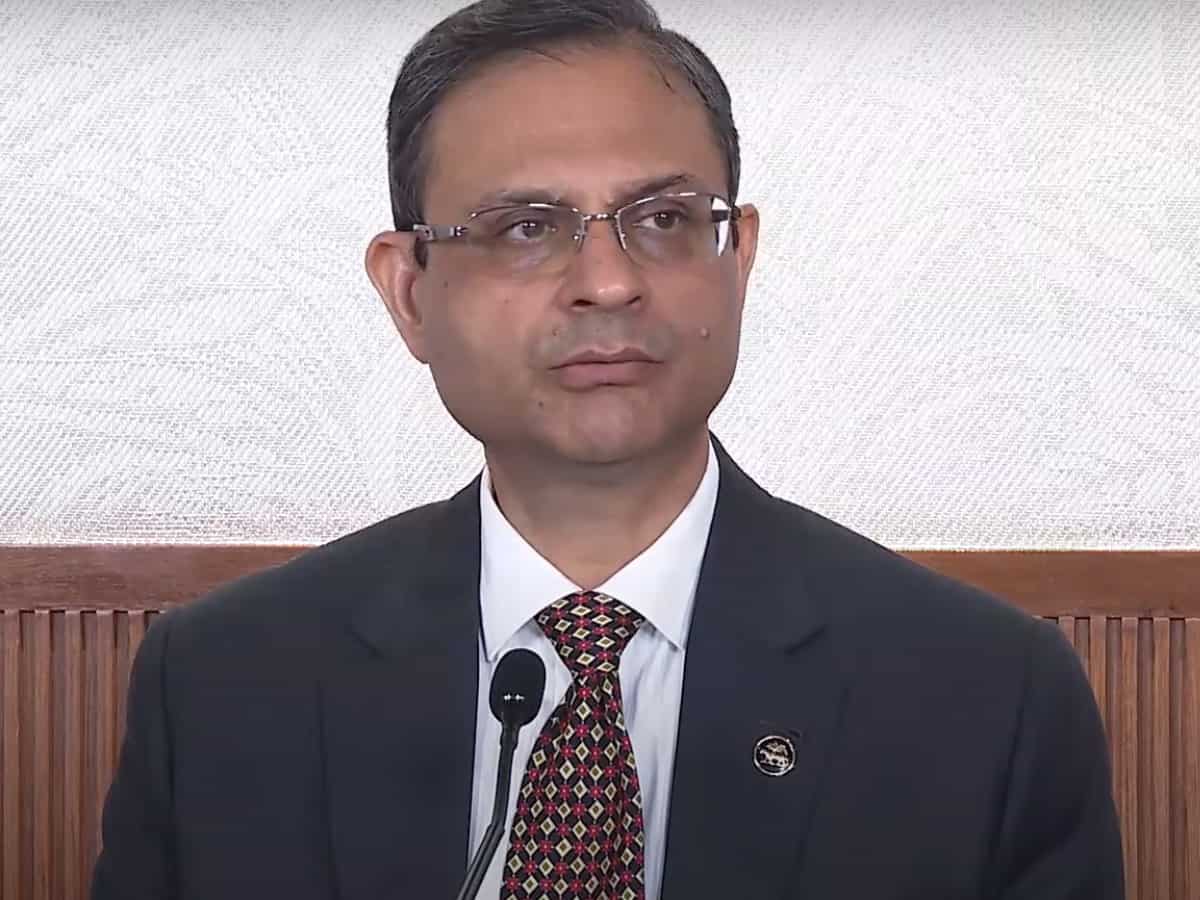
Earlier in the day, announcing the bi-monthly monetary policy, RBI Governor Sanjay Malhotra said the central bank sees continued strength in domestic economic activity despite uncertain prospects for external demand.
“Prospects of external demand, however, remain uncertain amidst ongoing tariff announcements and trade negotiations. Taking all these factors into account, real GDP growth for 2025-26, the current year, is projected at 6.5 per cent, our earlier projection,” the governor said.
Also Read:Will substantially raise tariffs on India from 25% in next 24 hours: US President Donald Trump ahead of August 7 deadline
The statement comes a day after Trump warned of sharply raising tariffs on Indian imports within 24 hours, citing India’s continued purchase of Russian oil. Malhotra, addressing the uncertainties in the global trade environment, admitted the impact of these tariff developments is still unclear.
“There is still a lot of uncertainty, as was also mentioned in my statement and it's really very difficult to predict as to what the impact will be. Going forward, as we have mentioned, we will maintain a very, very close vigil on the incoming data and take a call as of now, we do not have sufficient data to revise our GDP forecasts,” he said.
While domestic macroeconomic conditions remain favorable—supported by a strong southwest monsoon, easing inflation, rising capacity utilisation, and conducive financial conditions—Malhotra flagged several downside risks.
“The headwinds emanating from prolonged geopolitical tensions, persisting global uncertainties, and volatility in global financial markets pose risks to the growth outlook,” he said.
On trade negotiations with the US, the governor struck a hopeful note. “Of course, trade negotiations as we'll continue, we are hopeful that we will have, you know, an amicable solution,” he said.
However, amid global uncertainty and potential future impacts, the RBI governor noted that India remains relatively insulated from external factors when it comes to inflation. 'We don't see a major impact of US tariff on Indian economy unless you have retaliatory tariffs,' said Malhotra while speaking at a press conference held after the monetary policy announcement.
Also Read:RBI MPC Meeting August 2025 Key Takeaways: Repo rate unchanged, policy stance neutral, CPI headline and food inflation, GDP growth, and more
Breaking down the quarterly GDP projections, the RBI expects real GDP growth at 6.5 per cent in Q1 of FY26, 6.7 per cent in Q2, 6.6 per cent in Q3, and 6.3 per cent in Q4. For Q1 of FY27, the forecast stands at 6.6 per cent.
The RBI’s Monetary Policy Committee also decided to hold the key policy repo rate at 5.5 per cent, keeping the monetary stance neutral amid the evolving global and domestic economic landscape.
“Growth is robust and as per earlier projections though below our aspirations. The uncertainties of tariffs are still evolving. Monetary policy transmission is continuing. The impact of the 100 bps rate cut since February 2025 on the economy is still unfolding,” the governor added.
The next MPC meeting is scheduled from September 29 to October 1, 2025.
Also Read:Trump's tariff threats, Russia oil remarks risk undoing 25 years of India-US ties: Carnegie report
India-US relations, built steadily over the past 25 years, are now facing fresh strain—and the American president’s recent comments aren’t helping.
Over the past few days, Trump has taken multiple swipes at New Delhi. From threatening steep tariff hikes to accusing India of profiting from Russian oil imports, the US president’s words have sparked concern over the future of bilateral trade.
India, however, isn’t staying silent. On Monday, New Delhi responded sharply to Washington’s allegations that it is buying "massive amounts" of Russian crude and selling it at a profit in global markets.
Reiterating its position, the Ministry of External Affairs (MEA) underlined that India would do what it takes to protect its interests. "India will take all necessary measures to safeguard its national interests and economic security," MEA said in a statement.
The foreign ministry also explained why India turned to Russian oil in the first place. According to the MEA, it wasn’t out of choice—but necessity.
"In fact, India began importing from Russia because traditional supplies were diverted to Europe after the outbreak of the conflict. The United States at that time actively encouraged such imports by India for strengthening global energy markets' stability," the ministry pointed out.
Get Latest Business News, Stock Market Updates and Videos; Check your tax outgo through Income Tax Calculator and save money through our Personal Finance coverage. Check Business Breaking News Live on Zee Business Twitter and Facebook. Subscribe on YouTube.
Shrishti Bisht is a business journalist at Zee Biz, where she covers a wide spectrum of stories that shape the world of business: from global developments and economic shifts to trending top ...LATEST NEWSBy accepting cookies, you agree to the storing of cookies on your device to enhance site navigation, analyze site usage, and assist in our marketing efforts.