What did Railways get in Budget 2026? How key allocations stack up vs expectations—A point-by-point guide
Published on 02/02/2026 08:18 PM
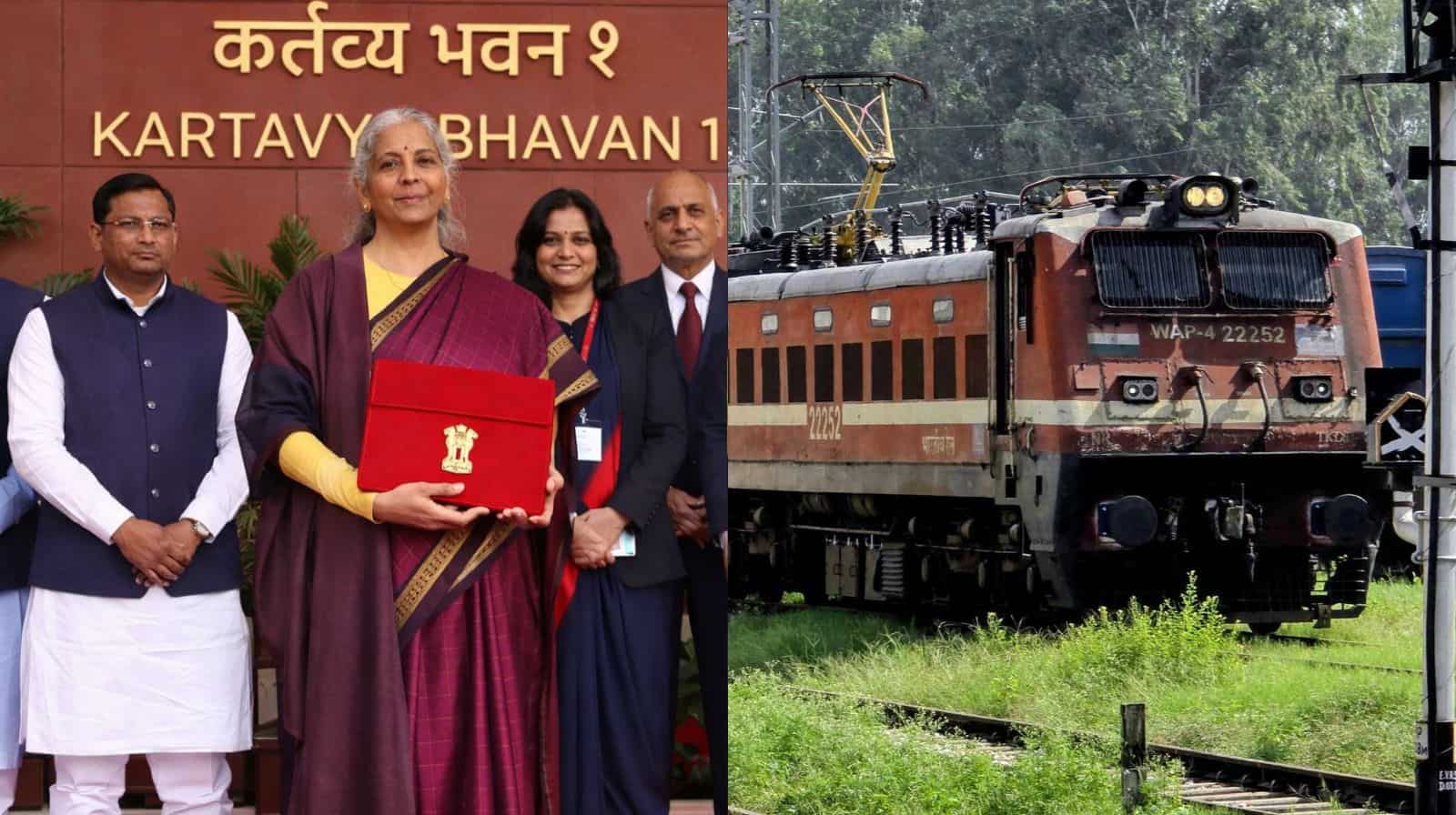
Budget 2026–27: Finance Minister Nirmala Sitharaman on Sunday, February 1, presented the Union Budget 2026-27 for the upcoming financial year 2026 in Parliament. During her ninth budget speech, she announced several important proposals for the railway sector like Kavach, new trains and corridors. Indian Railways has also received its highest ever capital allocation in Budget 2026.
Ahead of this Union Budget, expectations were high that the government would continue its strong push on Indian Railways. Zee Business had outlined a roadmap that indicated an increase in the total allocation along with faster rollout of safety systems like Kavach, and big-ticket announcements on new trains and corridors.
Let's compare Zee Business' expectations for the railway sector in Budget 2026 and What exactly did the railway sector get in the Union Budget.
The budget announcements largely met Zee Business' expectations, and in some areas even exceeded them. Indian Railways has received the highest ever capital allocation of Rs 2.93 lakh crore and there is a clear emphasis on speed, safety and capacity expansion.
Zee Business had expected the total railway allocation to rise by around 8 per cent, from Rs 2.65 lakh crore to nearly Rs 2.8 lakh crore. The Budget went a step further.
For 2026–27, the government has planned a record capital expenditure of Rs 2.93 lakh crore for Indian Railways, the highest-ever allocation for the sector. This underlines the government’s continued emphasis on rail infrastructure as a key driver of economic growth, logistics efficiency and employment generation.
The overall budgetary support of Rs 2.78 lakh crore reinforces Railways’ role in decongesting transport networks and reducing logistics costs across the economy.
Safety was one of the central expectations flagged by Zee Business, with an emphasis on bringing railway accidents down to single digits through higher spending on signalling, track renewal and rapid deployment of Kavach 4.0.
The Budget has responded decisively on this front. Nearly Rs 1.20 lakh crore has been earmarked exclusively for safety-related works, including track and rolling stock maintenance, upgraded signalling systems, CCTV installation and overhead electrification improvements. The government has also reiterated its commitment to faster rollout of the Kavach automatic train protection system across key routes.
According to the Railways Ministry, sustained investments have already led to a nearly 95 per cent reduction in accidents, and the renewed focus aims to strengthen safety outcomes further.
Zee Business had anticipated major announcements on high-speed rail, including increased funding for the Mumbai–Ahmedabad bullet train project and clarity on new corridors.
The Budget delivered strongly on this front, announcing seven high-speed rail corridors to be developed as "growth connectors". These include Mumbai–Pune, Pune–Hyderabad, Hyderabad–Bengaluru, Hyderabad–Chennai, Chennai–Bengaluru, Delhi–Varanasi and Varanasi–Siliguri.
Together, these corridors will span nearly 4,000 km and are expected to attract investments of around Rs 16 lakh crore. Travel times between major cities are set to reduce sharply, positioning high-speed rail as a transformative force for regional development.