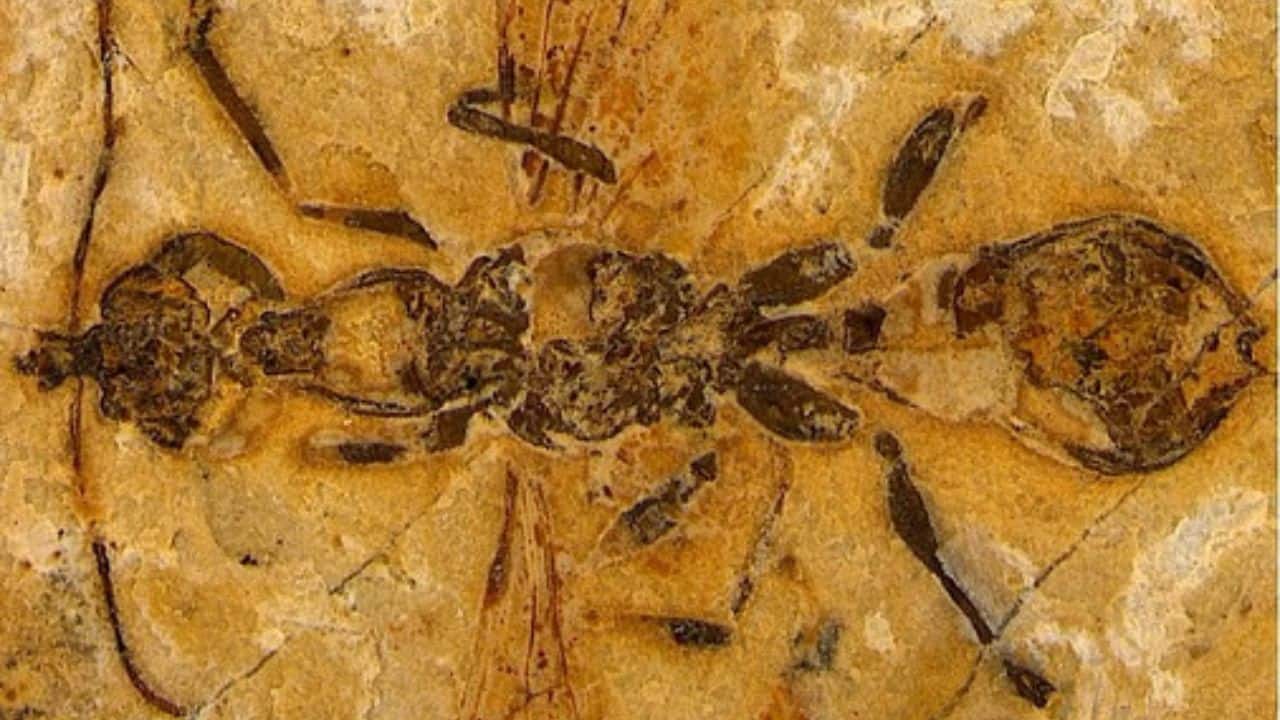
World’s oldest ant found: 113-million-year-old ‘hell ant’ fossil discovered in Brazil
Published on 29/04/2025 05:11 PM
When researchers carve into rocks, there aren't often surprises. But far beneath the Brazil limestone beds, scientists discovered an ant fossil like no other. It's not only old—it's older than the oldest ant known.
The 113-million-year-old fossil was unearthed in the Crato Formation in northeast Brazil. The area is already renowned for its superior fossil preservation. However, this is the first time a hell ant—part of the long-extinct Haidomyrmecinae group—has been encountered fossilised within rock instead of amber.
Major Characteristics Observed in Earlier Lineage
Reported in the journal Current Biology, the research uncovers the fossil's remarkable state of preservation. Researchers employed micro-CT scanning to generate high-resolution 3D images. The images revealed intricate jaw frameworks—like contemporary trap-jaw ants—but with characteristics specific to fossil species.
Hell ants are known for their upward-facing jaws that snap shut like traps. (Image: Current Biology)
Hell ants have their jaws snapping shut like traps pointed upwards. These specialised mouthparts indicate that these insects were already efficient predators in the early phases of ant evolution.
The new fossil reveals that ants not only existed much earlier than initially considered but were by then already diverse and present in a wide range across the globe. It discredits previously held notions concerning the time and place at which ants initially evolved.
An Unusual Find in Stone, Not Amber
Earlier, all hell ants that had been discovered were preserved in amber from France and Myanmar. This fossil, which was preserved in limestone, is of a different preservation type. It enabled researchers to examine characteristics not apparent in amber specimens.
The lead researcher, Anderson Lepeco of the Museu de Zoologia da Universidade de São Paulo, described the discovery as the "earliest undisputable geological record of ants." He explained further that the precise anatomy also showed surprising complexity in the insect's feeding system.
The ant also resembles species from Burmese amber, indicating that hell ants were more widely distributed than previously thought. This lends credence to hypotheses of early global expansion of ant species.
Early Ant History Now Better Revealed
The research sheds new light on early ant history. It indicates that the insects were already exhibiting specialist roles and sophisticated survival mechanisms millions of years ago.
Scientists say that this new species contributes to the diversity from that era. It also resets the ant evolutionary timeline, showing how tiny they were yet already occupying ecological niches at early stages.
This discovery not only adds a new species to the record but also sheds more light on the development of ants through the ages.
Discover the latest Business News, Budget 2025 News, Sensex, and Nifty updates. Obtain Personal Finance insights, tax queries, and expert opinions on Moneycontrol or download the Moneycontrol App to stay updated!
${res.must_watch_article[0].headline}
Sensex Today Jammu Kashmir News Live Canada Election Results Q4 Results 2025 Live Ather Energy IPO GMP India at UN Gold Price HDFC Bank Market Cap Paytm First Games IPL Points Table 2025
Business Markets Stocks India News City News Economy Mutual Funds Personal Finance IPO News Startups
Home Currencies Commodities Pre-Market IPO Global Market Bonds
Home Loans up to 50 Lakhs Credit Cards Lifetime Free Finance TrackerNew Fixed Deposits Fixed Deposit Comparison Fixed Income
Home MC 30 Top Ranked Funds ETFs Mutual Fund Screener
Income Tax Calculator EMI Calculator Retirement Planning Gratuity Calculator
Stock Markets
News18 Firstpost CNBC TV18 News18 Hindi Cricketnext Overdrive Topper Learning
About Us Contact Us Advisory Alert Advertise with Us SupportDisclaimer Privacy Policy Cookie Policy Terms & Conditions Financial Terms (Glossary) Sitemap Investors
You are already a Moneycontrol Pro user.