Budget 2026: Finance Minister launches India Semiconductor Mission 2.0 with Rs 40,000 crore outlay
Published on 01/02/2026 05:09 PM
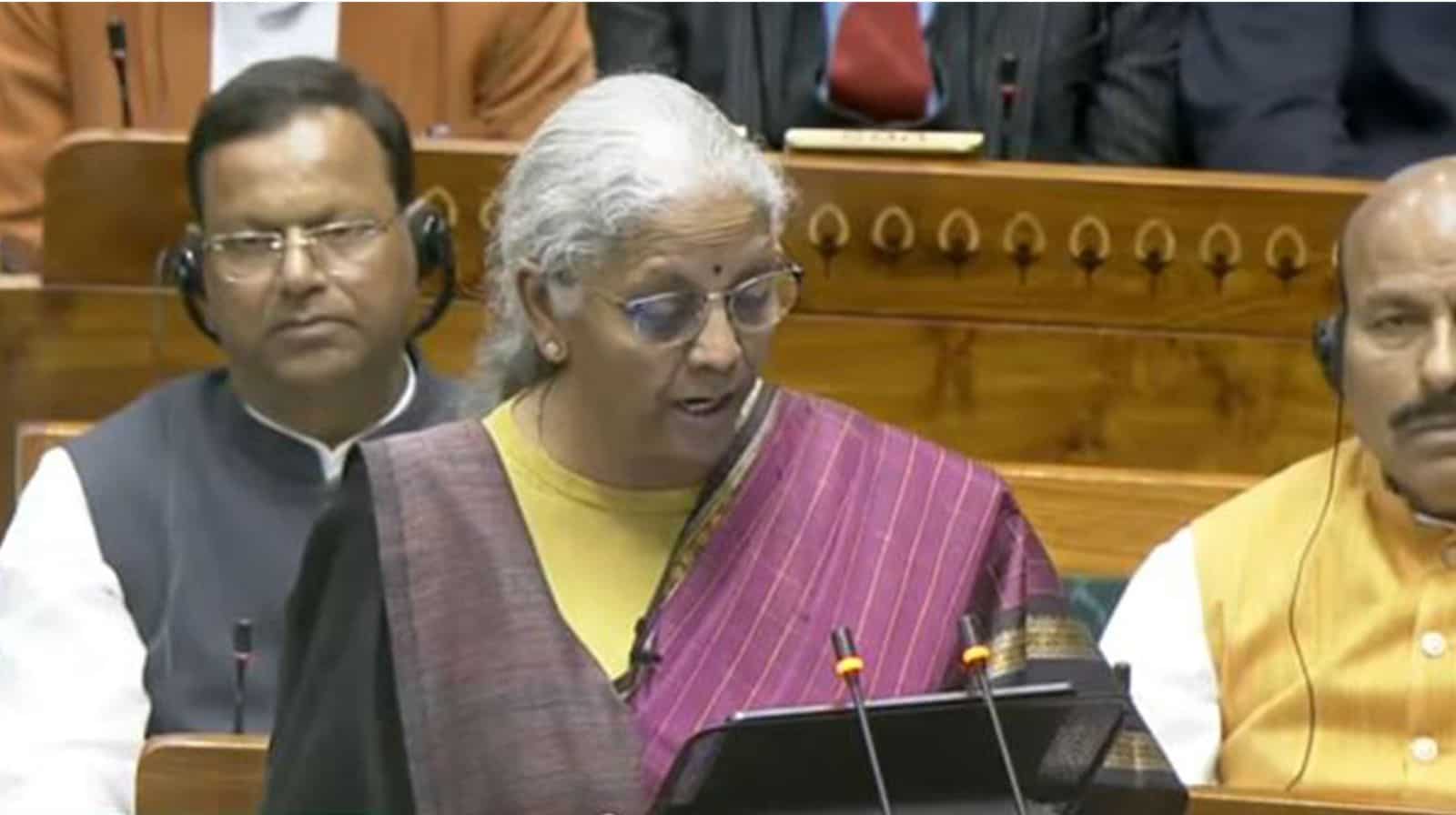
Budget 2026: Union Finance Minister Nirmala Sitharaman has presented the Union Budget for the Financial Year (FY) 2026-27 today, February 1, in the Parliament. In her ninth budget, she made several key announcements, including significant measures to accelerate the growth of India's electronics and information technology sector. On Sunday, she announced the launch of India Semiconductor Mission (ISM) 2.0 with an outlay of Rs 40,000 crore. It aims to boost the country's semiconductor ecosystem, produce equipment and materials, design full-stack Indian IP and strengthen supply chains.
Focus of India Semiconductor Mission (ISM) 2.0
While presenting the Budget 2026, FM Sitharaman stated that the new mission will focus on industry-led research and training centres to develop technology and a skilled workforce. For this, a provision of Rs 1,000 crore has been made in FY 2026-27. "ISM 1.0 has expanded the capabilities of India's semiconductor sector, and ISM 2.0 will build on this," PIB said, citing the government.
"India's semiconductor mission, 1.0 expanded India's semiconductor sector capabilities. Building on this, we launch ISM 2.0 to produce equipment and materials, develop full-stack Indian IP, and strengthen supply chains. We will also focus on industry-led research and training centers to develop technology and a skilled workforce. The Electronics Components Manufacturing Scheme launched in April 2025 with an outlay of Rs 22,919 crores already has investment commitments at double the targets. We propose to increase the outlay to Rs 40,000 crore to capitalise on this momentum," Sitharaman said.
FM also highlighted the success of the Electronics Components Manufacturing Scheme (ECMS), launched in April 2025 with an outlay of 722,919 crore, which already has investment commitments at double the target. It has now been proposed to increase the outlay to Rs 40,000 Crores to capitalise on the momentum.
In order to support the IT sector as India's growth engine and to provide tax certainty, Budget 2026-27 has proposed new safe harbour provisions for IT/ITeS with a higher threshold and competitive margin.
India is a global leader in software development services, IT-enabled services, knowledge process outsourcing services and contract R&D services relating to software development. Acknowledging the inter-connectedness of these business segments, the Budget has proposed to club all these services under a single category, Information Technology Services, with a common safe harbour margin of 15.5 per cent applicable to all.
The threshold for availing safe harbour for IT services is also proposed to be enhanced substantially from Rs 300 crore to Rs 2,000 crore. Safe harbour approvals will be granted through an automated, rule-driven process without the need for tax officer examination. Once applied for by an IT services company, the same safe harbour can be continued for a period of 5 years as desired by the company.
For IT services companies that want to enter into an Advance Pricing Agreement (APA), the Budget proposes to expedite the unilateral APA process for IT services and complete it within a period of 2 years. The two years can be extended by an additional six months upon the taxpayer's request. Furthermore, the revised return facility available to the entity entering into an APA is proposed to be extended to its affiliated entities.
Recognising the need to enable critical infrastructure and boost investment in data centres, Budget 2026-27 has also proposed to provide a tax holiday till 2047 to any foreign company that provides cloud services to customers globally by using data centre services from India. It will, however, need to provide services to Indian customers through an Indian reseller entity. Further, a safe harbour of 15 per cent on cost has also been proposed in case the company providing data centre services from India is a related entity.
A High-Powered 'Education to Employment and Enterprise' Standing Committee has also been proposed to recommend measures that focus on the Services Sector as a core driver of Viksit Bharat. The committee will also assess the impact of emerging technologies, including AI, on jobs and skill requirements and propose measures thereof.