Deepinder Goyal’s LAT Aerospace acquires defence robotics startup Sharang Shakti
Published on 24/02/2026 12:34 PM
Deepinder Goyal’s LAT Aerospace acquires defence robotics startup Sharang ShaktiLAT Aerospace acquires Sharang Shakti in Gurgaon to boost indigenous defence robotics, aiming to develop shared technology for both defence and civil aviation platforms in India.By Shilpa Ranipeta February 24, 2026, 12:34:03 PM IST (Updated)3 Min ReadDeepinder Goyal’s aviation venture LAT Aerospace has acquired Gurgaon-based defence robotics startup Sharang Shakti, marking its first formal entry into indigenous defence capabilities.
Announcing the development on X, Goyal said the acquisition is “our first move toward building indigenous defence capabilities alongside our long-term mission of developing next-generation civil aviation platforms from India.”
He added that civil aviation and defence are often seen as separate sectors, but the underlying technology stack overlaps across autonomy, perception, sensing, navigation, guidance and control systems. “By bringing Sharang Shakti into LAT, we are building these capabilities in-house, from first principles, with the intent to deploy them across both defence and civil programs over time,” he wrote.
What is Sharang Shakti?
Founded in 2023 by Karan Goyal, Chirag Singla, Jitendra Singh, Gaurav Kumar and Rishabh Choudhary, Sharang Shakti operates in the niche but fast-evolving space of airspace surveillance and airborne threat mitigation.
According to its website, the company is building integrated counter-drone systems that combine early warning radar, autonomous aerial interceptors and onboard machine learning for real-time threat neutralisation.
Its current projects include:
Development of a low C-SWaP early warning radar system for detecting small aerial threats
Creation of unmanned aerial vehicles designed to intercept unauthorised drones, both through kinetic and non-lethal means
One of Sharang’s flagship products is vajR, described as a hardkill aerial interceptor for counter-drone operations.
As part of an integrated detection and interception system, vajR receives approximate target coordinates from a ground station and autonomously navigates toward the threat. Once the adversary drone enters its electro-optical infrared sensor field of view, onboard machine learning algorithms enable tracking and rapid mid-air interception.
The company says vajR neutralises enemy drones using kinetic force through a collision manoeuvre. Operations are fully autonomous, with a human in the loop for override control when required.
The vajR Hangar enables autonomous take-off, landing and charging, allowing sustained operational readiness and integration with modern ground control stations.
Sharang’s second key platform is hantR, short for “destroyer” in Sanskrit. Unlike vajR’s hardkill approach, hantR is built for short-range airborne threat detection, tracking and non-lethal capture.
Equipped with onboard sensors and a net-launching mechanism, hantR can intercept and neutralise drones in a controlled manner based on mission requirements. According to the company, once long-range ground detection systems provide coordinates, the hantR Hangar activates an autonomous mission. Within 100 metres of the target, its inbuilt detection system locks and tracks the drone for final engagement.
The focus, Sharang says, is on tackling small, low-altitude drones that exploit gaps in unprotected airspace.
It's third offering is the low C-SWaP radar system is designed for portability and field deployment across counter-drone applications.
Sharang Shakti had raised Rs 5 crore in a pre-seed funding round in September 2024, co-led by AUM Ventures and Venture Highway. JK Group’s family office, Appreciate Capital and other angel investors also participated.
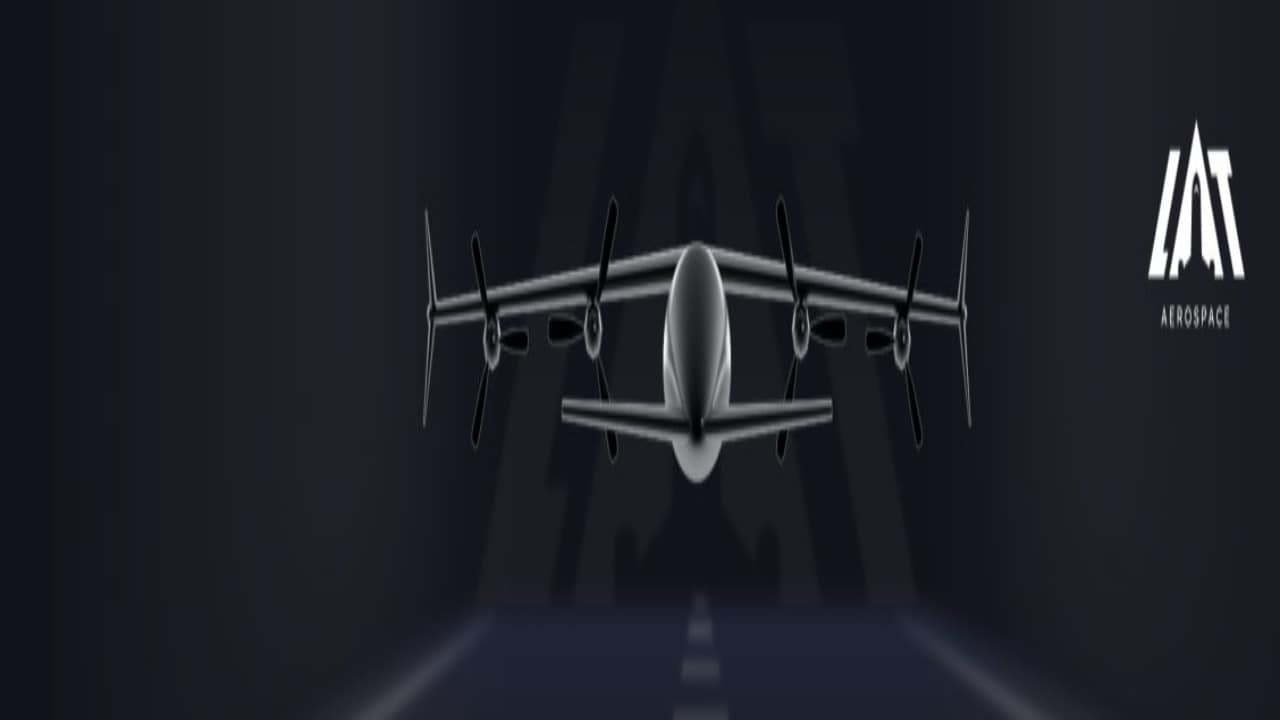
LAT Aerospace, Goyal’s capital-intensive aviation venture, is developing a hybrid-electric short take-off and landing aircraft aimed at regional operations. The company says it is building the aircraft from first principles across aerodynamics, propulsion and autonomy.
In January, LAT said it successfully demonstrated ultra short take-off capability in a Lat One v0.1 test flight, although the aircraft later crashed due to known structural defects identified through simulations. The company is now working on the next version.Continue ReadingFirst Published: Feb 24, 2026 12:20 PM ISTTagsaviationcompaniesMarket