Dow Jones Today | US Stock Market LIVE Updates: Wall Street opens higher ahead of US inflation data as oil surge keeps markets cautious
Published on 13/03/2026 08:03 PM
Consumer confidence in the United States edged lower in March as geopolitical tensions escalated following military strikes involving United States, Israel and Iran.
The latest survey from the University of Michigan showed its consumer sentiment index slipping to 55.5 in March, slightly below February’s level and broadly in line with expectations. While the measure of current economic conditions rose modestly, the expectations index dropped more sharply, reflecting growing uncertainty about the outlook.
Survey director Joanne Hsu said early interviews had shown improving sentiment, but the escalation in the Middle East erased those gains. Meanwhile, inflation expectations remained relatively stable, with the one-year outlook holding at 3.4%.
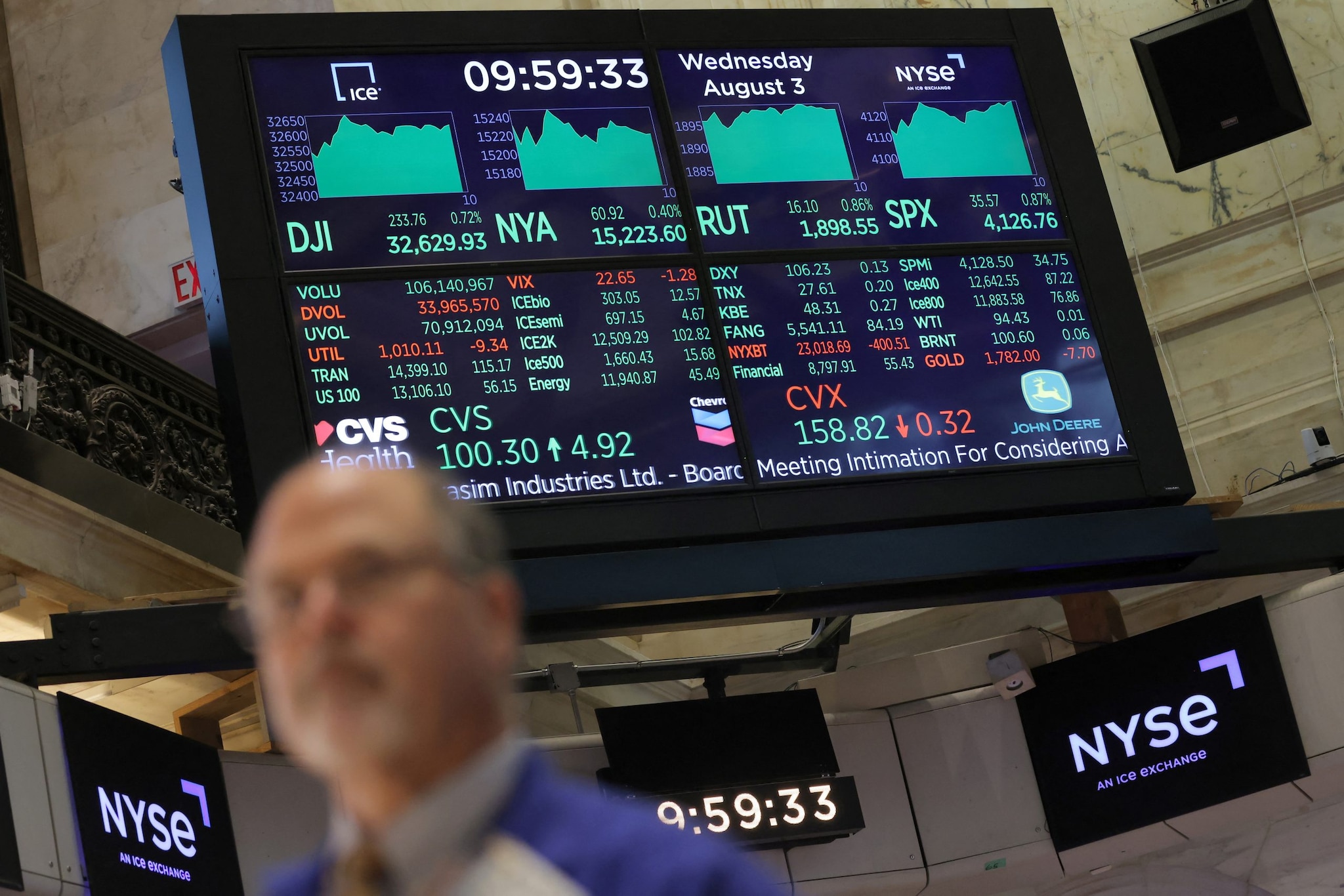
US stocks opened higher on Friday, with all three major benchmarks posting early gains as investors reacted to improving market sentiment. The Dow Jones Industrial Average rose about 301 points, or roughly 0.7%, in early trading.
The broader S&P 500 advanced around 0.5%, reflecting gains across multiple sectors of the market. Meanwhile, the tech-heavy Nasdaq Composite also climbed about 0.5% at the open.
The positive start suggests investors remain cautiously optimistic about economic conditions and corporate performance, even as markets continue to watch global developments and policy signals for clues about the outlook ahead.
Pete Hegseth, the US defence secretary, has downplayed concerns that a potential disruption in the Strait of Hormuz could become a prolonged crisis amid tensions with Iran.
Speaking at a Pentagon briefing, Hegseth said the United States has long prepared for such a scenario and is actively managing the situation. “We have been dealing with it, and don’t need to worry about it,” he said, dismissing fears that a closure of the key shipping route could severely disrupt global trade and energy flows.
The Strait of Hormuz is one of the world’s most critical maritime chokepoints, carrying a significant share of global oil shipments. Any disruption typically raises concerns about energy supply shocks and rising crude prices.
Hegseth also rejected reports suggesting the US military lacked a plan to respond to such a scenario before the conflict escalated. According to him, contingency planning had already been in place, and actions would be carried out “sequentially” based on strategic priorities and operational needs.
US Treasuries advanced on signs of a more discerning consumer, sticky inflation and weaker growth, helping to pare weekly losses spurred by concern that a war-driven rally in oil prices would fan price pressures and prevent US interest-rate cuts.
The modest increases following Friday’s economic data pushed yields on two-year notes, the most sensitive to the Fed’s policy changes, lower by almost five basis points to 3.7%. The 10-year was two basis points lower to 4.24%.
Economic growth was much slower than expected in the final three months of 2025, while core inflation rose to start 2026, the Commerce Department reported Friday.
Gross domestic product, a measure of all the goods and services produced across the sprawling U.S. economy, rose at a seasonally and inflation-adjusted annual rate of just 0.7% in the fourth quarter, according to the department’s Bureau of Economic Analysis.
The first revision of the GDP reading was a sharp step down from the previous estimate of 1.4% and well below the Dow Jones consensus forecast for 1.5%. It also marked a considerable slowdown from the 4.4% gain in the prior period.
European natural gas is headed for a weekly drop, with many market players pulling back from trading futures after wild price swings and focusing instead on options.
Benchmark futures swung on Friday, with the most recent headlines from the Middle East pushing prices lower. Turkey said it’s got permission from Iranian authorities for one ship to pass through the Strait of Hormuz, according to state-run Anadolu Agency. Meanwhile, President Donald Trump said the US will be hitting Iran “very hard” next week, but added, “Hopefully things are going to go very well.”
German Chancellor Friedrich Merz criticised the US decision to ease sanctions against Russia by temporarily allowing oil sales to try to ease pressure on prices triggered by the Iran war.
The Trump administration has issued its second authorisation for buyers to take Russian oil cargoes already at sea, expanding a temporary waiver given last week to India. The move stoked concern among Ukraine’s allies that the Kremlin stands to benefit from the spike in energy prices and will use the extra funds to bankroll its four-year war on its western neighbour.
“Let me be very clear: we believe it would be wrong to ease sanctions now, for whatever reason,” Merz said Friday at a joint news conference with his Norwegian counterpart, Jonas Gahr Støre.
World shares retreated on Friday (March 13) while oil prices again popped above $100 per barrel as anxiety remained over the Iran war and its impact on supplies of crude oil and gas.
In early European trading, Britain’s FTSE 100 fell 0.7% to 10,235.29. Germany’s DAX lost 1% to 23,345.90, while France’s CAC 40 dropped 1.2% to 7,887.18.
In Asian trading, Tokyo’s Nikkei 225 index slipped 1.2% to 53,819.61. Technology-related stocks saw some of the bigger losses, with SoftBank Group falling 4.5%. South Korea’s Kospi fell 1.7% to 5,487.24. Hong Kong’s Hang Seng lost 1% to 25,465.60, while the Shanghai Composite index was down 0.8% at 4,095.45.
Watch this space for all the live updates on the US Stock Market.NewsLive TVMarketPopular CategoriesCalculatorsTrending NowLet's Connect with CNBCTV 18Network 18 Group :©TV18 Broadcast Limited. All rights reserved.