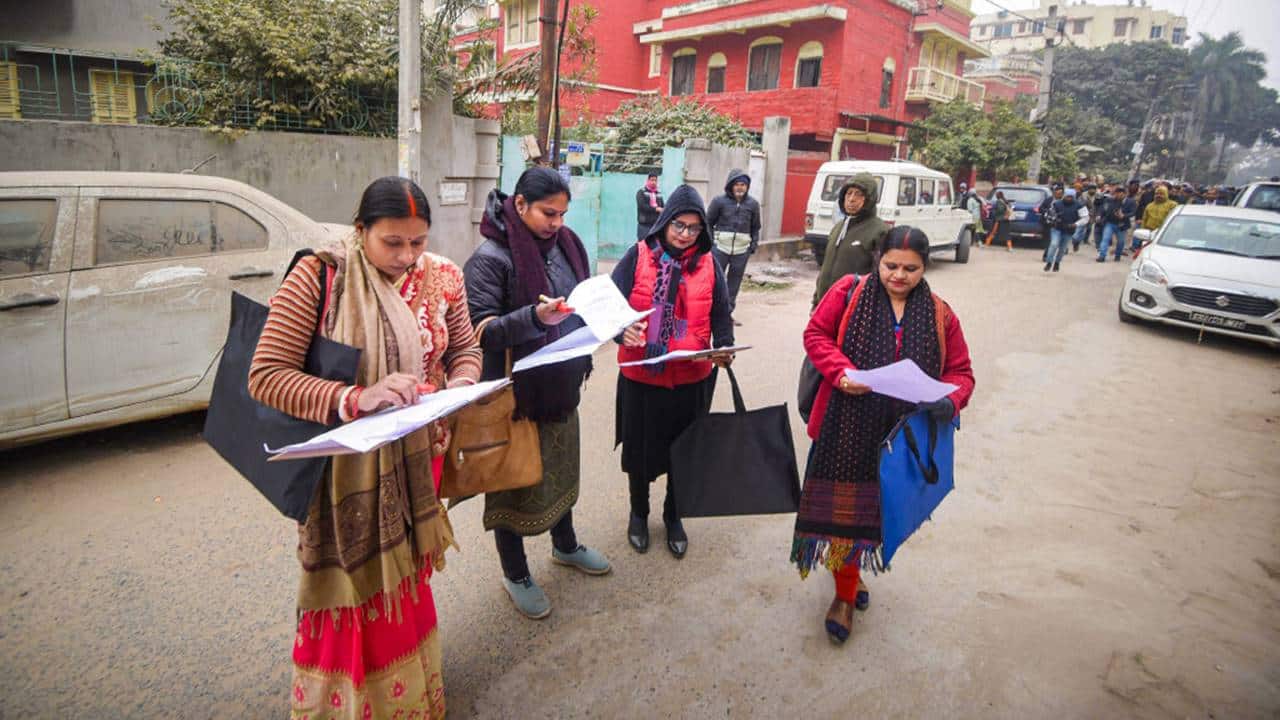
SC districts have done better on poverty reduction than non-SC districts: Census data
Published on 01/05/2025 07:28 PM
Districts with a higher proportion of Scheduled Caste population (over 20 percent) have done better than districts which had fewer people from the category between 2015-16 and 2019-21, an analysis of data from the 2011 Census and Niti Aayog's report has found.
While the average poverty reduction across districts was 29.6 percent across the country, districts with more SC population saw multidimensional poverty decline by 39 percent between 2015-16 and 2019-21.
!function(){"use strict";window.addEventListener("message",(function(a){if(void 0!==a.data["datawrapper-height"]){var e=document.querySelectorAll("iframe");for(var t in a.data["datawrapper-height"])for(var r,i=0;r=e[i];i++)if(r.contentWindow===a.source){var d=a.data["datawrapper-height"][t]+"px";r.style.height=d}}}))}();
The analysis uses Census 2011 figures to determine the SC population and correlates the numbers with Niti Aayog’s report on multidimensional poverty.
The poverty reduction is calculated by determining the reduction in the headcount rate of poverty between the two periods. For instance, in the case of Cooch Behar, a district with 50 percent of the SC population, poverty was down to 10.31 percent in 2019-21 from 21.9 percent in 2015-16.
How they fared
Of the 627 districts for which data was available, 185 had an SC population of over 20 percent, while 166 had a Scheduled Tribe population of over 20 percent.
Data shows that SC majority districts have done better than ST ones.
The average poverty reduction for SC majority districts was 39.2 percent compared with 25.6 percent for districts with fewer than 20 percent SC population.
ST majority districts witnessed a lower decline in poverty during this period.
The poverty reduction across these 166 districts was just 11.1 percent compared with 36 percent for districts with fewer ST people (less than 20 percent).
The Cabinet on April 30 announced its decision to include the caste census as part of the overall census exercise. The decision comes in the wake of demands by the opposition parties to conduct a caste census.
States like Bihar, Karnataka and Telangana have already conducted such census on a state level.
The last survey on caste was conducted in 2011-12, but the results were not released. However, the socioeconomic caste census does form the basis of the distribution of welfare schemes across the country.
Following the government’s announcement of a caste census, Leader of Opposition in Lok Sabha Rahul Gandhi pressed for revocation of the 50 percent ceiling for reservations, and batted for reservation in private sector jobs as well.
Discover the latest Business News, Budget 2025 News, Sensex, and Nifty updates. Obtain Personal Finance insights, tax queries, and expert opinions on Moneycontrol or download the Moneycontrol App to stay updated!
${res.must_watch_article[0].headline}
Stock Market Holiday MI vs RR Live Score Jammu Kashmir News Live GST Collections in April Heatwave in India Q4 Results 2025 Live Hit 3 Review JKBOSE 10th Result 2025 Kolkata News IPL Points Table 2025
Business Markets Stocks India News City News Economy Mutual Funds Personal Finance IPO News Startups
Home Currencies Commodities Pre-Market IPO Global Market Bonds
Home Loans up to 50 Lakhs Credit Cards Lifetime Free Finance TrackerNew Fixed Deposits Fixed Deposit Comparison Fixed Income
Home MC 30 Top Ranked Funds ETFs Mutual Fund Screener
Income Tax Calculator EMI Calculator Retirement Planning Gratuity Calculator
Stock Markets
News18 Firstpost CNBC TV18 News18 Hindi Cricketnext Overdrive Topper Learning
About Us Contact Us Advisory Alert Advertise with Us SupportDisclaimer Privacy Policy Cookie Policy Terms & Conditions Financial Terms (Glossary) Sitemap Investors
You are already a Moneycontrol Pro user.