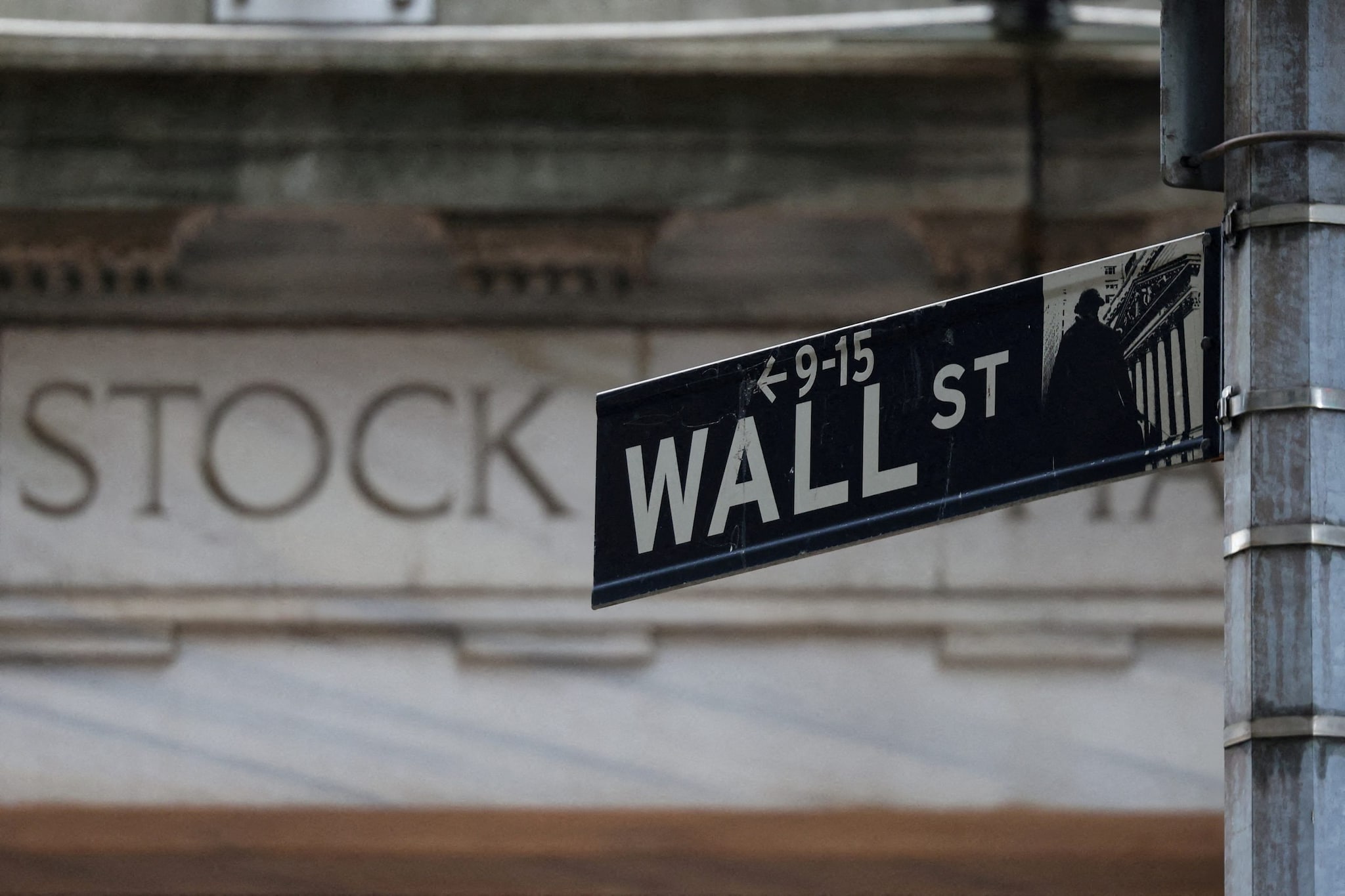
US Stock Market LIVE Updates: Trump offers 25% tariff rate to Japan, South Korea; Dow Jones falls 450 points
Published on 07/07/2025 11:03 PM
President Donald Trump announced Monday that the US would hit products from Japan and South Korea with 25% tariffs, sending shares of Toyota and Honda down.
US-traded shares of Toyota Motor dropped more than 4%, while Honda Motor shares slid nearly 4%.
Blackouts in the US could double by 2030 amid an expected increase in power demand brought on by AI, according to a Trump administration report that blames the expected energy shortfall on the closures of coal and natural gas power plants and overreliance on renewable energy.
A 100% “surge in power outages” is expected within five years if planned power plant closures remain on schedule without new units to replace them, the Energy Department, which is releasing the report on Monday, said in a statement. “Staying on the present course would undermine U.S. economic growth, national security, and leadership in emerging technologies,” it said.
The report backs President Donald Trump’s pro-coal and anti-renewable approach to energy generation, painting wind and solar as unreliable and part of a “radical green agenda of past administrations.” It also comes as the Energy Department has been using emergency authority to extend the life of coal and other plants, citing concerns about shortages of electricity as data centers, which power artificial intelligence models, require more supply.
The Federal Reserve can’t assume its benchmark lending rate won’t return to zero at some point in the future, according to a group of New York Fed researchers including the bank’s president, John Williams.
The authors, in a blog post published Monday, found a 9% probability the federal funds rate would hit the so-called zero lower bound, or ZLB, over a seven-year horizon, with the current high level of interest-rate uncertainty contributing to that risk.
“Compared with the past decade, current data show that expected levels of future interest rates are high,” Williams and his co-authors wrote. “Nevertheless, ZLB risk remains significant over the medium to long term, similar to levels observed in 2018, due to recent elevated uncertainty.”
Now that Congress has lifted the US debt ceiling, the Treasury is preparing to replenish its cash buffer, though it likely won’t need to raise as much as it did in 2023.
Wrightson ICAP expects the Treasury to issue roughly $450 billion in net bills during the third quarter — far below the $1.1 trillion issued in the same period two years ago, following the suspension of the debt ceiling in June 2023.
Front-end investors will be closely monitoring the Treasury’s efforts to rebuild its cash balance at the Federal Reserve, as the influx of new bills is expected to drive yields higher across a range of instruments, from Treasury-backed repurchase agreements to agency debt.
European natural gas prices edged higher as traders eyed US President Donald Trump’s fast-approaching tariff deadline and the impact levies will have on global economic activity.
Benchmark futures added 0.5% on Monday, after posting a small weekly gain through Friday. The US is preparing to start delivering letters to dozens of countries in the coming days, with the Trump administration’s 90-day pause on higher duties set to expire on Wednesday.
The initial rollout of Trump’s so-called reciprocal tariffs in early April sparked fears of a US recession and sent energy prices tumbling on expectations that a weaker economy will curb demand. For Europe, which competes with other nations for liquefied natural gas cargoes, a further drop in prices could help ease its efforts to replenish fuel stockpiles ahead of next winter.
Tom Homan, the border czar for President Donald Trump, said that immigration agents will ramp up arrests in New York City as part of a broader crackdown on sanctuary jurisdictions that limit cooperation with federal authorities.
“We’re going to be in New York City,” Homan told reporters at the White House on Monday. “President Trump said it two weeks ago — we’re going to double down and triple down on sanctuary cities. Why? Not because it’s a blue city or a blue state, but because we know that’s where the problem is.”
His remarks came just days after New York City mayoral frontrunner Zohran Mamdani, a state assemblyman from Queens, vowed to sever all ties between city agencies and ICE if elected in November.
Tesla Inc. shares fell after Elon Musk announced he’s forming a new political party, digging deeper into a pursuit that’s been a drag on his most valuable business.
The chief executive officer announced over the weekend that he’ll take on Republicans and Democrats with the “America Party,” focusing on House and Senate seats for the next 12 months. After that, backing a candidate for president isn’t out of the question, Musk wrote on X.
Tesla’s stock slid 7.4% as of 11 a.m. Monday in New York, wiping out $16.7 billion from his net worth, according to the Bloomberg Billionaires Index. If that drop were to hold, it would be the biggest decline for the shares since Musk’s initial falling out with Donald Trump over the president’s tax bill in early June.
The stock has declined 28% this year as the CEO’s politicking has hurt Tesla’s standing with car buyers.
The United States will impose 25% blanket tariffs on imports from Japan and South Korea starting August 1, President Donald Trump revealed Monday.
Trump, in a pair of Truth Social posts, shared screenshots of letters apparently sent to Japanese Prime Minister Ishiba Shigeru and South Korean President Lee Jae-myung dictating the new tariff rates.
Both letters say that the 25% tariffs are separate from additional sector-specific duties on key product categories.
The letters also note, “Goods transshipped to evade a higher Tariff will be subject to that higher Tariff.” Transshipping in this case appears to refer to the practice of transferring goods to an interim country prior to their final shipment to the U.S. in order to skirt tariffs.
Stocks fell Monday as traders weighed the latest developments on the trade front to start the week.
The Dow Jones Industrial Average slipped 447 points, or 1%. The S&P 500 fell 0.8%, and the Nasdaq Composite lost 0.9%.
Treasury Secretary Scott Bessent said Monday on CNBC’s “Squawk Box” that there would be several trade announcements over the next 48 hours, adding that he expects “it’s going to be a busy couple of days.” However, Bessent did not specify which countries would be involved.
Chilean copper mines had their best month of export revenue in more than three years in June, with the increase in value outstripping price gains in a sign of rising production.
The country that accounts for about a quarter of the world’s mined copper shipped $4.7 billion worth of the metal last month, the biggest haul since December of 2021, according to data released by the Chilean central bank on Monday.
That’s 17% more than the same month last year, signalling that at least part of the increase was the result of higher volume given prices rose 11% on average over the same period. Chile is yet to report June production.
Blackstone Inc. is exploring further inroads into the booming private credit-secondaries market, people with knowledge of the matter said.
The alternative investing giant is considering a stand-alone pool of capital to buy second-hand private credit funds, said the people, who weren’t authorised to speak publicly as the matter is private. That would be a departure from the current approach where it invests through its flagship private equity funds.
A new strategy would fall under the remit of Blackstone’s Strategic Partners secondaries unit specialising in private equity, infrastructure and real estate. A spokesperson for Blackstone declined to comment.
Donald Trump accused Brazil of politically persecuting Jair Bolsonaro, launching a strident defense of the right-wing former president who is set to face trial on charges that he attempted a coup.
“I’ll be watching the WITCH HUNT of Jair Bolsonaro, his family, and thousands of his supporters, very closely,” Trump said in a Monday morning social media post. “The only Trial that should be happening is a Trial by the Voters of Brazil — It’s called an Election. LEAVE BOLSONARO ALONE!”
Bolsonaro, who forged close ties to Trump by mimicking his political and governing style during his time in office, will face trial later this year on charges that he attempted a coup against President Luiz Inacio Lula da Silva following his narrow defeat in the 2022 election.
Stocks fell and the dollar rose at the start of a potentially volatile week as US trading partners rushed to finalise deals with President Donald Trump’s administration before Wednesday’s deadline. Short-dated Treasuries outperformed.
Following a rally to all-time highs, the S&P 500 lost steam, with a gauge of megacaps down about 1.5%. Tesla Inc. tumbled 7% as Elon Musk announced he’s formed a new political party, digging deeper into a pursuit that’s been a drag on his most valuable business.
Yemen’s Houthis have claimed responsibility for an attack on a ship sailing through the Red Sea on Sunday, in their first strike on merchant shipping since December.
The rebel group fired drones and missiles at the Magic Seas, an Ultramax vessel owned by Greece’s Stem Shipping, Houthi armed forces spokesperson Yahya Saree said in a televised statement on Monday.
The vessel was targeted because it had called at Israeli ports in the past, Saree said. Representatives of Stem Shipping were not immediately available to comment.
The Houthis started attacking commercial ships in late 2023, prompting the number of vessels transiting the Suez Canal to collapse. Traffic through the waterway, which is crucial to global trade, remained low in the first half of 2025 despite the absence of new attacks. In May, US President Donald Trump said a truce had been brokered with the Houthis.
The world’s biggest oil product market is hungry for barrels as traders grapple with a summer supply squeeze.
US stockpiles of diesel products have dropped to the lowest for the time of year since 1996, while in Europe, benchmark futures are signalling a tighter market than during the height of the Israel-Iran conflict. The cost of the fuel relative to crude — a key trading metric known as the crack — is well above seasonal norms in both regions.
The pressure on supplies has been driven by refinery closures on both sides of the Atlantic and a slew of recent outages, as well as the impact of production curbs by key OPEC+ producers. Last month, diesel accounted for just 31.4% of global output of oil products, well below the seasonal average, according to figures from Energy Aspects Ltd.
Activist short seller Andrew Left is set to appear in federal court Monday in a securities fraud case that shook the industry a year ago, setting up a battle over investor tips and free speech.
A judge in Los Angeles will hear arguments on whether to dismiss the criminal case accusing Left of using false and misleading social-media posts about his trading intentions in more than a dozen companies to make a quick profit. Left claims the US Justice Department is targeting him unfairly and hasn’t proved he told a single lie.
“His case is a critical test for protecting free speech on social media,” Left’s attorney Eric Rosen, a former federal prosecutor, said in a statement. “After seven years, the DOJ still cannot point to a single false statement by Andrew — that is because there were none.”
S. Daniel Abraham, the New Yorker who became a billionaire by tempting dieters with Slim-Fast meal-replacement shakes and selling his company in 2000 to Unilever NV, has died. He was 100. He died on June 29, according to American Friends of Bar-Ilan University, on whose board he had served.
Abraham, who lived in Israel with his family from 1972 to 1978, co-founded the Washington-based S. Daniel Abraham Center for Middle East Peace in 1989. He was a major donor to the US Democratic Party. His net worth was about $2.4 billion, according to Forbes magazine.
A group of Sunnova Energy’s unsecured creditors voiced opposition to the final approval of a debtor-in-possession facility, including a proposed legal release for pre-petition lender KKR & Co.
The proposed $90 million DIP lending — which would fund bankruptcy proceedings and business operations — requires the solar company to agree to give up its right to pursue claims against KKR, according to court papers. The initial portion the loan has been approved.
The facility was entered “when the debtors’ solvency was clearly in question,” the group said in papers filed Thursday. “KKR should not receive such a broad release this early in the case.”
The head of Vestas Wind Systems A/S, one of the world’s largest wind turbine makers, has a blunt warning for Europe: adopt bolder industrial policy or risk watching business drift across the Atlantic and to other regions.
As demand rises for cheap and reliable power, Vestas’s Chief Executive Henrik Andersen said in an interview with Bloomberg News that the European Union’s fragmented approach to industry jeopardises the continent’s quest to achieve energy independence and compete against other global manufacturers.
“Wind is largely a European creation — born in our universities, tested on our sites,” he said. “If we don’t protect and support what we’ve built, companies like ours will eventually move out of Europe. It’s that simple.”
A pre-summer frenzy in junk loans is seeing the market start to overheat, prompting investors to get a bit more picky about deals after spreads reached the tightest levels in years.
A rush of issuance — driven by private equity firms seeking to improve the capital structures of portfolio companies — had been met with high demand from M&A-starved investors, enabling borrowers to squeeze their interest margins by as much as 75 basis points on some offerings.
But some investors are now feeling the strain. Managers of collateralised loan obligations — the biggest buyers of leveraged loans — are particularly struggling to make the numbers work.
BRICS officials kept their collective heads down on Monday morning as they awoke to an overnight threat by US President Donald Trump to penalize them for adopting policies he said were “anti-American.”
Members of the ten-nation grouping of emerging-market economies were reluctant to engage with Trump’s warning of additional 10% tariffs as they left their hotels in suddenly-rainy Rio de Janeiro for the concluding day of the BRICS summit hosted by President Luiz Inacio Lula da Silva.
The Brazilian leader declined to comment to reporters, saying he would speak only after the summit. His top foreign policy adviser, Celso Amorim, avoided escalation in his response.
“The threats only show the need for an organisation like the BRICS, which has the capacity to react, to meet and reach conclusions,” he said in an interview, noting that BRICS “didn’t threaten the US with anything.”
Stc Group’s venture capital arm has invested in Tarmeez Capital, a Saudi debt investment platform planning a push into private credit.
Tali Ventures took a minority stake in the Riyadh-based firm, Tarmeez Chief Executive Officer Nasser Alsaadoun said, without disclosing details on the deal. Tarmeez expects to get its asset management license in Saudi Arabia later this year, allowing it to start originating and managing credit to private companies, he added.
It aims to then raise as much as 1 billion riyals ($267 million) for its first private credit fund within two years. Tarmeez will also consider an initial public offering in the next three years, Alsaadoun said in an interview.
China is considering doubling an investment channel local investors use to buy bonds overseas, according to people familiar with the matter, a major step in its efforts to loosen restrictions on financial flows.
Regulators in the country have held early talks about expanding the so-called Southbound Bond Connect program to as much as 1 trillion yuan ($139 billion), said the people, who asked not to be identified because the details are private. The expansion would be through an up-to-500 billion yuan annual quota to non-bank financial institutions, which are currently left out of the trading link.
Any such move would allow onshore firms to ramp up their exposure to international bonds that are tradeable through Hong Kong’s stock exchange, including those denominated in dollars. The country’s biggest mutual funds would be among the firms eligible for the new quota, the people said.
Russian air travellers faced major disruption over the past three days as carriers cancelled, rescheduled and rerouted flights due to the threat from Ukrainian drones. Airlines cancelled 485 flights and delayed 1,900 others from Saturday through Monday morning, Artyom Korenyako, a spokesman for the country’s aviation authority, said in a statement on Telegram.
Russia’s air transportation system had faced “external interference,” he said, adding that all airports had resumed normal operations.
Both Moscow and St. Petersburg were targeted by drones over the weekend, causing air space restrictions. Airports in those cities were among the most impacted by the disruptions. Mobile internet outages also affected passengers at St. Petersburg’s Pulkovo airport.
Secretary of State Marco Rubio is set to make his first trip to Asia as top US diplomat this week to discuss trade and security with regional counterparts who are looking to avoid President Donald Trump’s looming tariff increases.
Rubio flies to Kuala Lumpur, Malaysia on Tuesday for a gathering of the Association of Southeast Asian Nations. While the US isn’t a full member of ASEAN, American officials often participate in its summits, as do China and Russia.
Rubio “is focused on reaffirming the United States’ commitment to advancing a free, open, and secure Indo-Pacific region,” the State Department said in a statement.
CoreWeave Inc. said it has agreed to buy Core Scientific Inc. in an all-stock deal worth about $9 billion that will allow it to expand its artificial intelligence data center capacity.
The transaction values Core Scientific’s stock at $20.40 per share, according to a statement from CoreWeave on Monday. That represents a 66% premium over the closing price on June 25, the trading day before the Wall Street Journal reported that the two companies were in advanced talks.
The deal is expected to close in the fourth quarter of 2025, according to the statement, pending regulatory approvals. “This acquisition accelerates our strategy to deploy AI and HPC workloads at scale,” said Michael Intrator, CoreWeave’s chief executive officer, using an acronym for the phrase high-powered computing.
The UK is racing to secure a US agreement to make operational a deal to eliminate tariffs on British steel ahead of a Wednesday deadline when American officials could choose instead to raise the levy to 50%.
Eliminating the tariffs is critical to an already struggling British steel industry because the US is the second-biggest export destination for the alloy from the UK.
“We are working with the US to get this over the line as soon as possible,” UK Prime Minister Keir Starmer’s spokesman, Tom Wells, told reporters on Monday. “The best thing we can do for industry is to get this deal implemented.”
BlackRock Inc. agreed to buy real estate firm ElmTree Funds, which leases built-to-suit commercial properties to single-tenant renters, adding an investor with $7.3 billion in total assets under management.
ElmTree will be integrated into Private Financing Solutions, the new platform created through BlackRock’s $12 billion purchase of credit firm HPS Investment Partners last year. Payment for ElmTree will be primarily in stock, with the potential for additional consideration based on ElmTree’s performance over the next five years, BlackRock said in a statement Monday. The purchase price and other financial details weren’t disclosed.
Founded in 2011, ElmTree has offices in St. Louis, New York, Chicago, Austin, Phoenix and Newport Beach, California, and investments in 122 properties in 31 US states. The deal will allow ElmTree, which focuses on industrial real estate, to expand into new markets as an owner-operator, according to the statement. The transaction is expected to be completed in the third quarter.
US stocks futures fell and the dollar rose, with investors on edge about the potential for more tariffs from the Trump administration.
S&P 500 contracts declined 0.2% with trading set to resume after the July 4 holiday. Tesla Inc. slumped more than 6% in early trading after Elon Musk announced he will form a new political party.
The dollar rose 0.5%, putting the greenback on course for its biggest advance in three weeks. Emerging-market currencies fell, with the South African rand sliding 1%, after US President Donald Trump warned he would add extra tariffs on any country that aligns with “the anti-American policies of BRICS.”
Michael Saylor’s Strategy registered an unrealised gain of $14.05 billion in the second quarter due to a rebound in Bitcoin’s price and a recent accounting change.
The unrealised gain was partially offset by a related deferred tax expense of $4.04 billion, the company said in a US Securities and Exchange Commission filing on Monday.NewsLive TVMarketPopular CategoriesCalculatorsTrending NowLet's Connect with CNBCTV 18Network 18 Group :©TV18 Broadcast Limited. All rights reserved.