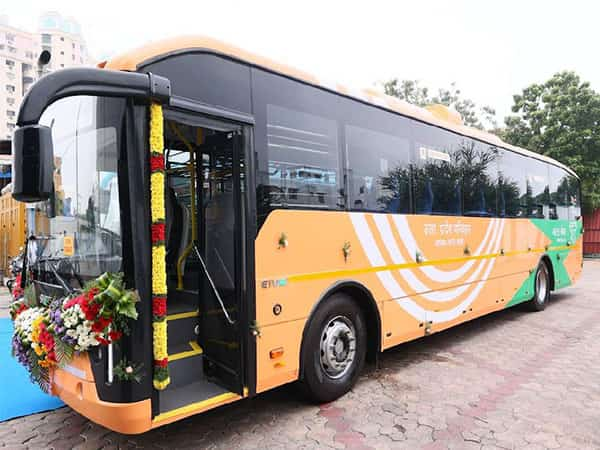
Yogi Adityanath-led UP govt begins converting diesel buses to electric; trials to begin on Jhansi–Lalitpur route soon
Published on 04/06/2025 05:57 PM
Uttar Pradesh has taken its first major step toward transitioning its public transport system to electric. Acting on the directive of Chief Minister Yogi Adityanath, the Uttar Pradesh State Road Transport Corporation (UPSRTC) has begun converting old diesel-run buses into electric vehicles.
Two such retrofitted buses have already been completed at the Ram Manohar Lohia Workshop in Kanpur and are set to begin trial runs on the Jhansi–Lalitpur route.
Instead of auctioning diesel buses after they clock 10 years or 11 lakh kilometres, the government will now retrofit them saving significant capital costs. While UPSRTC will handle the bus body construction, private firms such as Kalyani Powertrain and Zero21 are covering the cost of electric conversion. This move, officials say, is not only cost-effective but also a big step toward reducing carbon emissions in the state.
Minister of State for Transport Dayashankar Singh said that the conversion drive is part of a larger plan to add 5,000 electric buses to UPSRTC’s fleet. The department is actively working on a roadmap to scale up electric mobility across Uttar Pradesh. As part of this effort, 220 electric buses including 20 air-conditioned double-deckers were deployed for the Mahakumbh recently.
The state’s efforts are in sync with the Centre’s broader electric mobility plan. In 2024, the Union Cabinet approved the PM-eBus Sewa-Payment Security Mechanism (PSM) scheme to support procurement and operation of over 38,000 electric buses across India from FY 2024-25 to FY 2028-29, with a total outlay of Rs 3,435.33 crore.
The scheme allows buses to be inducted via a Public-Private Partnership (PPP) on the Gross Cost Contract (GCC) model. OEMs and private operators will procure and run the buses, while the implementing agency CESL ensures payment security by stepping in if state PTAs default—making the model more attractive to private players.
Dieslectric buses offer essentially two advantages: lowered operational costs and lowered emissions. Since currently most PTA fleets are diesel or CNG, a shift to e-buses would definitely lessen the consumption of fossil fuels and the emission of greenhouse gases.
Both central and state governments now support electric mobility, and UP has thus become the forefront state, with proactive planning for retrofits with an eye toward a greener future for public transport.
Get Latest Business News, Stock Market Updates and Videos; Check your tax outgo through Income Tax Calculator and save money through our Personal Finance coverage. Check Business Breaking News Live on Zee Business Twitter and Facebook. Subscribe on YouTube.
LATEST NEWSBy accepting cookies, you agree to the storing of cookies on your device to enhance site navigation, analyze site usage, and assist in our marketing efforts.