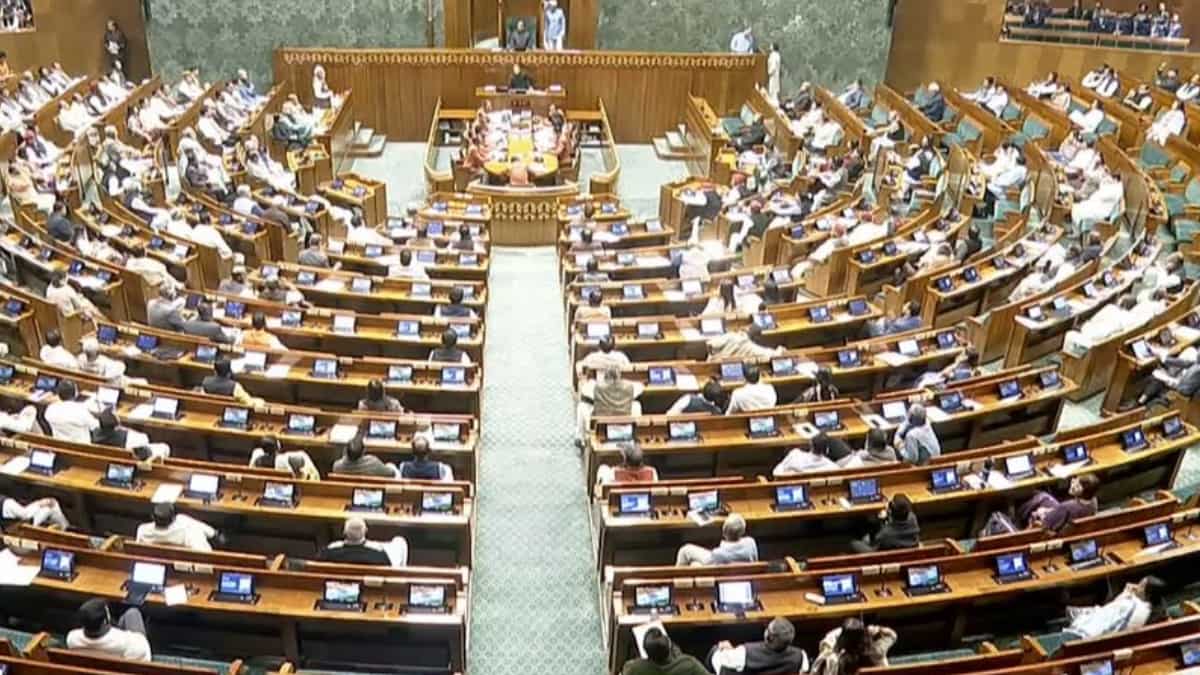
Winter Session of Parliament concludes with record productivity and key legislation
Published on 19/12/2025 01:13 PM
Friday marked the conclusion of the Winter Session of Parliament, wherein both Houses Rajya Sabha and Lok Sabha experienced a raucous but effective session resulting in some considerable determinations.
The 18th Lok Sabha was adjourned for an indefinite period as the assembly convened for the final sitting.
Speaker Om Birla promptly declared the closure right after the proceedings started, thus signaling the termination of a fruitful session that lasted over 15 sittings.
In his address, Speaker Birla praised the members for their vigor and support during the entire session.
Birla with pride announced that Lok Sabha had recorded a productivity of 111 per cent which is an indicator of time being used efficiently and debates being focused.
The legislative assembly saw the enactment of vital legislation, such as the Viksit Bharat Guarantee for Rozgar and Ajeevika Mission (Gramin) Bill, 2025 (VB-G RAM G Bill), which takes the MGNREGA scheme to another level by providing a guarantee of 125 days of rural employment, and the Sustainable Harnessing and Advancement of Nuclear Energy for Transforming India (SHANTI) Bill, 2025, which brings in the private sector's participation to increase the generation of clean energy.
Speaking of the session's other major developments, there were discussions around grant approvals, air pollution, and changes in insurance law.
MPs from both sides of the House took part in the late-night sessions and ensured that the agenda was fully dealt with.
The following gathering is presumed to take place within the context of the Budget Session in the beginning of 2026.
On Friday, the Chairman and Vice-President C.P. Radhakrishnan brought to a close the 269th session of the Rajya Sabha, which is a part of the ongoing Winter Session of Parliament, by sending it off indefinitely, and thus signifying the end of a very productive period.
The Chairman Radhakrishnan took the business listed when the Upper House met.
After the papers were laid, the Chairman declared the parliamentary session 269 of the House as dissolved and showed his utmost gratitude to Prime Minister Narendra Modi, Leader of House J.P. Nadda, Leader of Opposition Mallikarjun Kharge, and all other members for their good wishes and cooperation.
This was the first session of his presiding over the Upper House after taking office.
He referred to the session as "very productive" and mentioned the unprecedented daily average of over 84 Zero Hour notices, a 30.1 per cent increase over the previous two sessions, and more than 15 issues brought up daily during Hour, which is almost a 50 percent increase, as the most remarkable achievements.
To ensure the accomplishment of the tasks, the House worked for approximately 92 hours with a fantastic productivity rate of 121 per cent, thereby sitting late or omitting lunch recesses on five different days.
The main topics of the debates included a special memorial debate for the 'Vande Mataram' 150th anniversary which lasted for two days and saw the participation of 82 members, and a three-day discussion on electoral reforms with 57 members involved.
The Rajya Sabha approved eight bills among which was the Water (Prevention and Control of Pollution) Amendment Act, 2024, where 212 members took part.
There were 59 Private Members' Bills introduced, which is a new record, thus showing an active and lively democratic participation.